
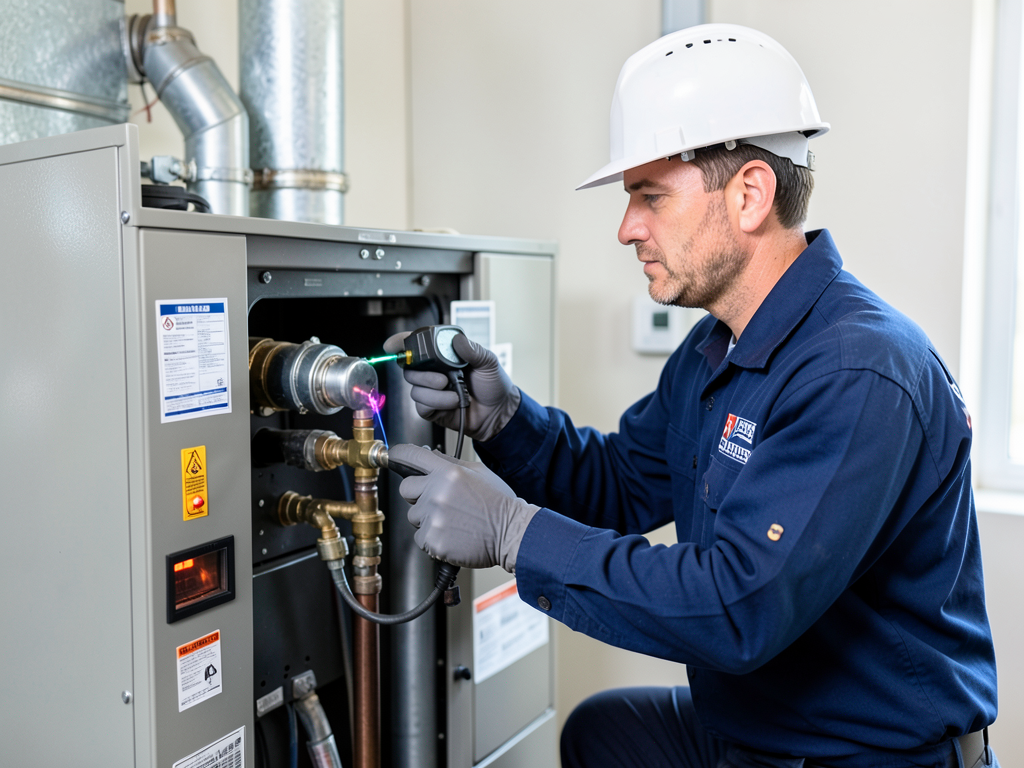
Checking for carbon monoxide leaks in your Lockhart home this winter
Carbon monoxide is an invisible, odorless gas that can kill within minutes. In Lockhart homes with gas furnaces, water heaters, or fireplaces, winter brings unique risks as heating systems work harder and homes stay sealed tighter. This guide covers Lockhart-specific CO safety concerns, Florida code requirements, and how to protect your family. Florida Building Code R315 Requirements.
Lockhart sits in Orange County where many homes built before 2008 lack the CO detector requirements newer Florida homes have. The area’s high humidity and occasional freezing temperatures create conditions where gas appliances work harder, increasing the risk of incomplete combustion and CO production.
Why carbon monoxide is an HVAC safety concern in Lockhart
Carbon monoxide forms when fuels like natural gas, propane, or oil burn incompletely. Your gas furnace produces CO as a normal byproduct, but it should vent safely outside through the flue pipe. Problems occur when heat exchangers crack, flues block, or ventilation fails. Emergency Furnace Repair.
Lockhart’s older homes often have aging HVAC systems that haven’t had proper maintenance. The area’s high humidity accelerates corrosion in metal components, particularly heat exchangers and flue pipes. When these parts fail, CO can leak into your living space.
Common causes of CO leaks in Lockhart HVAC systems:
- Cracked heat exchangers from years of expansion and contraction
- Blocked flue pipes from bird nests or debris
- Improper venting during high-humidity months when air density changes
- Backdrafting from negative air pressure in tightly sealed homes
According to the CDC, carbon monoxide poisoning sends over 20,000 Americans to emergency rooms annually. Florida’s mild winters mean many homeowners don’t think about CO risks until it’s too late. CDC Carbon Monoxide Poisoning Information.
Recognizing carbon monoxide poisoning symptoms
CO poisoning symptoms mimic the flu but without fever. Early signs include headache, dizziness, weakness, nausea, and confusion. As exposure increases, symptoms worsen to vomiting, chest pain, and loss of coordination.
Unlike the flu, CO symptoms affect everyone in the home simultaneously and improve when you leave the house. Pets often show symptoms first since they’re smaller and more sensitive to CO.
Physical signs of CO problems in your Lockhart home:
- Soot streaks around gas appliances
- Excessive moisture on windows near fuel-burning equipment
- Yellow or flickering burner flames instead of blue
- Rust or corrosion on flue pipes
During winter, Lockhart homes stay sealed to conserve heat, which can trap CO if there’s a leak. The area’s occasional cold snaps mean furnaces run longer cycles, increasing the chance of a problem developing.
Florida Building Code requirements for CO detectors
Florida Residential Building Code R315 mandates CO alarms in homes with fuel-burning appliances or attached garages. Homes built after 2008 must have hardwired CO detectors with battery backup. Older Lockhart homes built before these codes took effect often lack proper protection.
Code requirements specify:
- One CO alarm within 10 feet of each sleeping area
- Alarms on every level of the home
- Combination smoke/CO units acceptable in most cases
UL 2034 safety standards require CO detectors to sound at 70 parts per million after 60-240 minutes, or 400 ppm after 4-15 minutes. However, symptoms can occur at much lower levels, which is why many HVAC professionals recommend low-level CO monitors that detect 10-50 ppm. Professional duct cleaning services for historic homes in Thornton Park.
Lockhart’s location in Orange County means your home must meet both state and local inspection requirements. If you’re selling or renting, missing CO detectors can delay closings or violate landlord obligations.
Proper CO detector placement and types
Placement matters as much as having detectors. Install CO alarms:
- Outside each sleeping area
- On every level of your home
- Near but not directly above fuel-burning appliances
- High on walls or on ceilings (CO rises with warm air)
During hurricane season, Lockhart residents often use portable generators. Never operate generators inside or within 20 feet of windows, doors, or vents. Generator exhaust can enter your HVAC system and spread CO throughout your home.
Detector types comparison:
| Detector Type | Power Source | Best For | Lifespan |
|---|---|---|---|
| Battery-only | Replaceable batteries | Renters, temporary use | 5-7 years |
| Hardwired with battery backup | AC power with 9V backup | Homeowners, code compliance | 7-10 years |
| Low-level monitor | Plug-in or hardwired | High-risk households | 5-7 years |
Replace CO detectors every 5-7 years even if they appear to work. Sensors degrade over time and may not detect dangerous levels when needed.
Preventative maintenance: your best defense against CO leaks
Annual HVAC maintenance catches problems before they become dangerous. A professional inspection includes combustion analysis, heat exchanger examination, and venting system checks.
During a maintenance visit, technicians use combustion analyzers to measure CO levels in flue gases. Readings above 100 ppm indicate incomplete combustion requiring immediate attention. The analyzer also checks oxygen levels and stack temperature to ensure efficient operation.
Heat exchanger inspection process:
- Visual examination for cracks, rust, or corrosion
- UV dye test to reveal microscopic cracks
- Combustion analysis to detect CO leaks
- Airflow testing to ensure proper ventilation
Lockhart’s high humidity means HVAC systems work harder and components wear faster. Salt air from coastal areas can travel inland, accelerating corrosion in metal parts. Homes near lakes or wetlands face additional moisture challenges.
Professional maintenance includes:
- Cleaning burners and heat exchangers
- Checking gas pressure and manifold settings
- Inspecting and cleaning flue pipes
- Testing safety controls and limit switches
- Verifying proper venting and combustion air supply
Many Lockhart homeowners skip maintenance until problems arise. This approach risks CO exposure and leads to costly emergency repairs. Regular maintenance costs less than half of emergency service calls. Fast and affordable AC leak repair in Altamonte Springs.
Emergency steps: what to do if your CO alarm sounds
If your CO alarm activates, treat it as a life-threatening emergency. Carbon monoxide can incapacitate people within minutes at high concentrations.
Immediate actions:
- Get everyone outside immediately to fresh air
- Call 911 from outside the home
- Don’t re-enter until emergency responders declare it safe
- Turn off fuel-burning appliances if you can do so safely
Don’t waste time opening windows or trying to find the source. CO can overcome you before you realize the danger. Symptoms worsen quickly, and confusion from CO exposure can prevent you from making rational decisions.
After emergency responders clear your home, call a licensed HVAC contractor for professional diagnosis. Don’t operate gas appliances until they’ve been inspected and cleared.
Common sources of CO activation:
- Blocked flue pipes from animal nests
- Cracked heat exchangers
- Improperly adjusted burners
- Backdrafting from exhaust fans creating negative pressure
- Nearby vehicle exhaust or generator operation
Lockhart’s older homes may have multiple fuel-burning appliances, making source identification more complex. Professional testing with combustion analyzers pinpoints the exact problem.
Special considerations for Lockhart’s climate and housing stock
Lockhart’s subtropical climate creates unique HVAC challenges. High humidity means air conditioners run longer, creating more condensation and moisture-related corrosion. The area’s occasional freezing temperatures can cause thermal stress on heat exchangers.
Many Lockhart homes were built during the 1970s and 1980s boom, using construction methods that don’t meet current energy codes. These homes often have inadequate combustion air supply, leading to backdrafting and CO risks.
Lockhart’s proximity to Orlando means it shares similar infrastructure challenges. The area’s sandy soil can cause foundation settling, which may affect vent pipe connections. Hurricane season brings additional risks as homeowners use portable generators without understanding proper placement.
Older Lockhart neighborhoods often feature:
- Converted garages now used as living space without proper ventilation upgrades
- Added rooms with HVAC systems not designed for the increased load
- Attic installations where heat buildup affects equipment performance
- Shared utility spaces where multiple fuel-burning appliances compete for combustion air
These conditions create perfect environments for CO problems to develop unnoticed until alarms sound or people get sick.
Professional CO testing vs. store-bought detectors
Store-bought CO detectors meet minimum safety standards but have limitations. They typically don’t alarm until CO reaches dangerous levels, providing no warning of developing problems.
Professional testing uses sensitive equipment that detects CO at much lower concentrations. Technicians can identify issues during early stages when simple adjustments prevent major problems.
Professional testing includes:
- Combustion analysis of flue gases
- Pressure testing of heat exchangers
- Vent system integrity checks
- Airflow and combustion air measurements
- Infrared scanning for heat patterns indicating cracks
The cost of professional CO testing ranges from $150-300 in the Orlando area, while emergency CO poisoning treatment can cost thousands in medical bills. Prevention costs far less than the consequences of exposure.
Many Lockhart homeowners wait until problems occur before calling professionals. This reactive approach puts families at risk and often results in higher repair costs. Annual maintenance agreements provide peace of mind and prevent emergencies.
Generator safety during hurricane season
Lockhart residents know hurricane season brings power outage risks. Portable generators provide essential backup but create serious CO hazards if used improperly.
Generator safety rules:
- Never operate generators indoors or in enclosed spaces
- Keep generators at least 20 feet from windows, doors, and vents
- Install battery-operated CO detectors in your home
- Never refuel a hot generator
- Install proper transfer switches for permanent backup systems
During extended outages, some homeowners bring generators into garages or carports for convenience. This practice has killed multiple Florida families. CO can enter your home through the smallest openings and spread quickly through HVAC systems.
Consider permanently installed standby generators with automatic transfer switches. These systems include proper venting and safety features that portable units lack. While more expensive initially, they provide safer, more reliable backup power.
Cost factors for CO safety improvements
Investing in CO safety involves several potential costs:
- CO detector installation: $50-200 per unit
- Professional HVAC inspection: $150-300
- Heat exchanger replacement: $1,500-3,500
- Complete furnace replacement: $3,000-7,000
- Standby generator installation: $5,000-15,000
While these costs seem significant, they pale compared to potential medical bills, property damage, or loss of life from CO poisoning. Many HVAC companies offer maintenance agreements that spread costs over time while ensuring regular safety inspections.
Lockhart homeowners should budget for annual HVAC maintenance as part of their home ownership costs. This preventive approach catches problems early and extends equipment life while protecting families from CO risks.
Frequently Asked Questions
How often should I replace my CO detectors?
Replace CO detectors every 5-7 years regardless of battery life. Sensors degrade over time and may not detect dangerous levels when needed. Write the installation date on the back of each unit to track replacement timing.
Can my air conditioner produce carbon monoxide?
Standard electric air conditioners cannot produce CO. Only fuel-burning appliances like gas furnaces, water heaters, and fireplaces create carbon monoxide. However, your AC system can distribute CO throughout your home if there’s a leak from another source.
What should I do if my CO alarm goes off but I feel fine?
Always treat CO alarms as emergencies. Leave the house immediately and call 911. You may not feel symptoms yet, but CO can incapacitate people quickly. Let professionals test your home before re-entering.
Are combination smoke/CO detectors as good as separate units?
Modern combination units meet all safety standards and are acceptable for most homes. The key is having properly placed, functioning detectors rather than separate or combination units. Follow manufacturer guidelines for placement and maintenance.
How can I tell if my furnace is producing CO without a detector?
Warning signs include yellow burner flames, soot around the unit, excessive moisture on windows, and rust on flue pipes. However, CO can be present without visible signs. Professional testing with combustion analyzers is the only reliable way to detect CO production.
Take action to protect your family today
Carbon monoxide poisoning is preventable with proper precautions and regular maintenance. Lockhart’s older homes and unique climate create specific risks that require attention.
Don’t wait for symptoms or alarm activation to address CO safety. Schedule a professional HVAC inspection to check for potential CO leaks and ensure your system operates safely.
Call (321) 463-7979 today to schedule your carbon monoxide safety inspection. Our licensed technicians will test your system, check for leaks, and provide recommendations to keep your family safe this winter.
Pick up the phone and call (321) 463-7979 before the next cold snap hits. Your family’s safety is worth the call.
Summit HVAC Orlando serves Lockhart and surrounding Orange County communities with emergency and scheduled HVAC services. Don’t let CO risks threaten your home comfort and safety.
{
“@context”: “https://schema.org”,
“@type”: “BlogPosting”,
“headline”: “Checking for carbon monoxide leaks in your Lockhart home this winter”,
“description”: “Protect your family from CO poisoning this winter. Learn Lockhart-specific HVAC safety tips, Florida code requirements, and when to call Summit HVAC for a professional inspection.”,
“wordCount”: 2047,
“datePublished”: “2026-04-13T11:42:00.000Z”,
“dateModified”: “2026-04-13T11:42:00.000Z”,
“inLanguage”: “en-US”,
“mainEntityOfPage”: {
“@type”: “WebPage”,
“@id”: “https://summithvacorlando.com”
},
“publisher”: {
“@type”: “LocalBusiness”,
“name”: “Summit HVAC Orlando”,
“url”: “https://summithvacorlando.com”
},
“author”: {
“@type”: “Organization”,
“name”: “Summit HVAC Orlando”,
“url”: “https://summithvacorlando.com”
},
“image”: {
“@type”: “ImageObject”,
“url”: “https://summithvacorlando.com/wp-content/uploads/2026/03/checking-for-carbon-monoxide-leaks-in-your-lockhar-1.png”
}
}
{
“@context”: “https://schema.org”,
“@type”: “HVACBusiness”,
“name”: “Summit HVAC Orlando”,
“url”: “https://summithvacorlando.com”,
“address”: {
“@type”: “PostalAddress”,
“addressLocality”: “Orlando”
},
“areaServed”: {
“@type”: “City”,
“name”: “Orlando”
}
}
{
“@context”: “https://schema.org”,
“@type”: “FAQPage”,
“mainEntity”: [
{
“@type”: “Question”,
“name”: “How often should I replace my CO detectors?”,
“acceptedAnswer”: {
“@type”: “Answer”,
“text”: “Replace CO detectors every 5-7 years regardless of battery life. Sensors degrade over time and may not detect dangerous levels when needed. Write the installation date on the back of each unit to track replacement timing.”
}
},
{
“@type”: “Question”,
“name”: “Can my air conditioner produce carbon monoxide?”,
“acceptedAnswer”: {
“@type”: “Answer”,
“text”: “Standard electric air conditioners cannot produce CO. Only fuel-burning appliances like gas furnaces, water heaters, and fireplaces create carbon monoxide. However, your AC system can distribute CO throughout your home if there’s a leak from another source.”
}
},
{
“@type”: “Question”,
“name”: “What should I do if my CO alarm goes off but I feel fine?”,
“acceptedAnswer”: {
“@type”: “Answer”,
“text”: “Always treat CO alarms as emergencies. Leave the house immediately and call 911. You may not feel symptoms yet, but CO can incapacitate people quickly. Let professionals test your home before re-entering.”
}
},
{
“@type”: “Question”,
“name”: “Are combination smoke/CO detectors as good as separate units?”,
“acceptedAnswer”: {
“@type”: “Answer”,
“text”: “Modern combination units meet all safety standards and are acceptable for most homes. The key is having properly placed, functioning detectors rather than separate or combination units. Follow manufacturer guidelines for placement and maintenance.”
}
},
{
“@type”: “Question”,
“name”: “How can I tell if my furnace is producing CO without a detector?”,
“acceptedAnswer”: {
“@type”: “Answer”,
“text”: “Warning signs include yellow burner flames, soot around the unit, excessive moisture on windows, and rust on flue pipes. However, CO can be present without visible signs. Professional testing with combustion analyzers is the only reliable way to detect CO production.”
}
}
]
}
{
“@context”: “https://schema.org”,
“@type”: “BreadcrumbList”,
“itemListElement”: [
{
“@type”: “ListItem”,
“position”: 1,
“name”: “Home”,
“item”: “https://summithvacorlando.com”
},
{
“@type”: “ListItem”,
“position”: 2,
“name”: “Blog”,
“item”: “https://summithvacorlando.com/blog”
},
{
“@type”: “ListItem”,
“position”: 3,
“name”: “Checking for carbon monoxide leaks in your Lockhart home this winter”
}
]
}
{
“@context”: “https://schema.org”,
“@type”: “Service”,
“serviceType”: “HVAC”,
“provider”: {
“@type”: “LocalBusiness”,
“name”: “Summit HVAC Orlando”,
“url”: “https://summithvacorlando.com”
},
“areaServed”: {
“@type”: “City”,
“name”: “Orlando”
},
“description”: “Protect your family from CO poisoning this winter. Learn Lockhart-specific HVAC safety tips, Florida code requirements, and when to call Summit HVAC for a professional inspection.”
}