
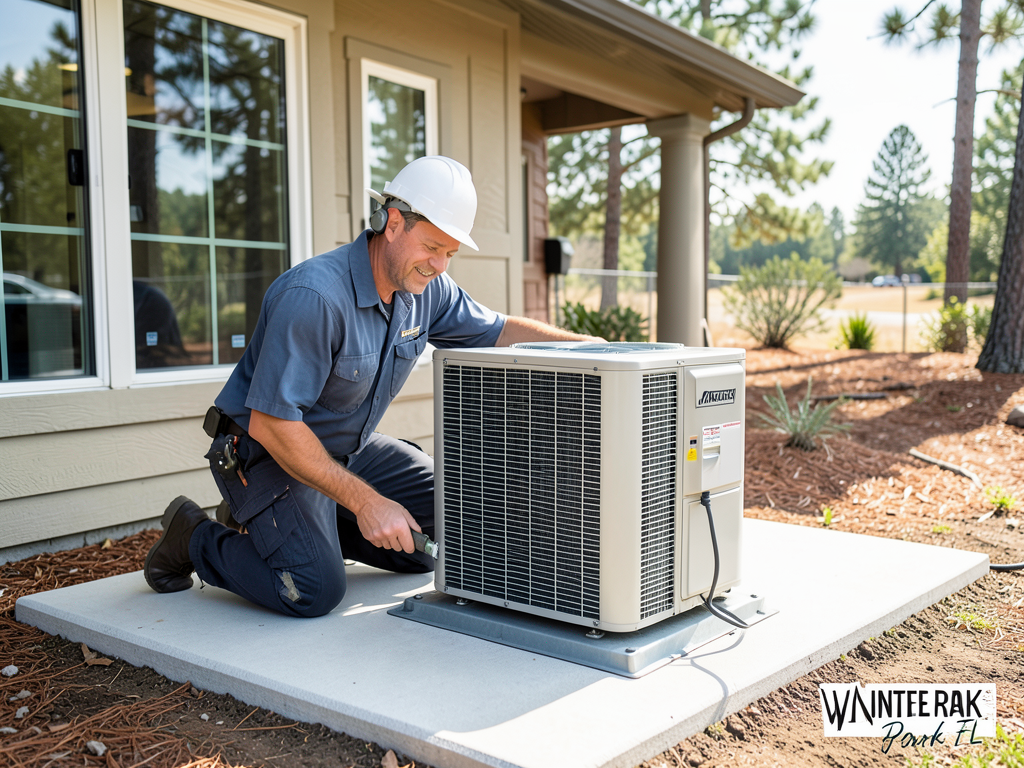
Professional AC Installation in Winter Park FL
When your air conditioning system fails in Winter Park’s subtropical climate you need more than just a contractor. You need a team that understands the unique challenges of installing HVAC systems in Central Florida’s historic neighborhoods and modern developments. The average Summer temperature in Winter Park hovers around 92 degrees with humidity levels consistently above 70 percent making reliable cooling not just a luxury but a necessity. Florida Building Code.
Winter Park homeowners face specific installation challenges from the historic bungalows near Rollins College to the newer energy-efficient homes in Baldwin Park. Each property type requires different approaches to ductwork sizing electrical load calculations and proper equipment placement to meet Florida Building Code requirements while maximizing efficiency. Winter Park Historic Preservation Board.
Expert Air Conditioning Replacement for Winter Park Homes
Winter Park’s architectural diversity creates distinct HVAC installation scenarios. The historic district homes built before 1940 often lack adequate attic space for modern ductwork requiring creative solutions like ductless mini-split systems or compact air handlers. Meanwhile newer construction in areas like Winter Pines and Howell Branch Hills typically allows for more traditional central air installations but demands compliance with strict SEER2 efficiency standards. How to choose a central air replacement that handles the Dr. Phillips humidity.
The soil composition in Winter Park presents another consideration. Sandy soil common throughout Orange County can cause settling issues for outdoor condenser units if not properly installed on concrete pads with proper leveling. This is particularly important near Lake Killarney and other water bodies where the water table can fluctuate dramatically during rainy seasons.
Winter Park’s tree canopy while beautiful creates additional challenges. Large oak and magnolia trees common in neighborhoods like Dommerich Estates can drop debris that clogs outdoor units if not properly protected. Professional installers must account for this when selecting equipment locations and designing protection systems. Professional duct cleaning services for historic homes in Thornton Park.
Our Installation Process From Load Calculation to Cool Comfort
Every successful AC installation begins with a proper Manual J Load Calculation. This industry-standard process determines the exact cooling capacity needed for your specific home. Factors include square footage insulation quality window orientation and even the number of occupants. In Winter Park we often find that homes near Park Avenue’s commercial district require different calculations than those in the quieter residential areas.
The installation process follows a precise sequence. First our technicians inspect existing ductwork for leaks damage or inadequate sizing. Many Winter Park homes built before 2000 have ductwork that’s 30 to 50 percent undersized for modern high-efficiency systems. We document all findings with thermal imaging cameras to identify hot spots and airflow restrictions.. Read more about Designing a custom HVAC system for new construction homes in Clermont.
Next comes equipment selection. We recommend SEER2 ratings between 16 and 21 for Winter Park’s climate. Higher ratings provide better efficiency but require careful matching with indoor air handlers. Our technicians use specialized software to ensure all components work together optimally preventing the common issue of mismatched systems that waste energy and reduce comfort.
Installation day involves multiple coordinated steps. Our team arrives with all necessary tools and materials including hurricane tie-downs required by Florida Building Code Section 301.3.7 for outdoor units. We protect your landscaping and interior spaces using drop cloths and floor runners. The process typically takes 6 to 8 hours for a complete system replacement.
System commissioning is the final critical step. We verify refrigerant charge measure airflow at each register and test electrical connections. We also calibrate smart thermostats for optimal performance in Winter Park’s climate where cooling demands vary significantly between day and night.
Energy-Efficient Systems SEER2 Ratings and Local Rebates
Florida’s adoption of SEER2 standards in 2023 raised the minimum efficiency requirements for new AC installations. In Winter Park this means all new systems must achieve at least 14 SEER2 for standard efficiency or 15 SEER2 for high-efficiency models. These ratings directly impact your utility bills with each point increase potentially saving 10 to 15 percent on cooling costs.
Duke Energy offers Smart $aver rebates for Winter Park residents. Current incentives include up to $250 for heat pump upgrades and $150 for central air conditioning installations meeting specific efficiency thresholds. These rebates require installation by certified contractors and proper documentation submitted within 90 days of installation. Duke Energy Smart $aver rebates.
Orange County also provides property tax exemptions for certain energy-efficient improvements. While not specific to HVAC these can apply when combined with other home improvements. Our team helps navigate these programs ensuring you maximize available savings on your new system.
Beyond rebates the long-term savings from high-efficiency systems often justify the higher upfront costs. A 20 SEER2 system might cost 30 percent more than a 16 SEER2 unit but can reduce monthly cooling bills by 25 to 35 percent in Winter Park’s climate. Over a typical 15-year system life this can mean thousands in savings.
Financing Options for Your New HVAC System
Understanding that AC replacement represents a significant investment we offer multiple financing solutions. Our partnerships with local credit unions and national lenders provide options ranging from 12-month interest-free plans to 10-year fixed-rate financing. These programs allow Winter Park homeowners to upgrade to more efficient systems without depleting savings.
Payment structures can be customized based on your budget and credit profile. Some homeowners prefer lower monthly payments spread over longer terms while others opt for accelerated payoff to minimize total interest. We provide clear comparisons showing total costs including interest over different scenarios.
Many Winter Park residents also explore home equity options. With property values remaining strong in the area tapping home equity for HVAC upgrades can provide tax advantages while improving home comfort and efficiency. We can connect you with financial advisors familiar with local market conditions.
For rental property owners in Winter Park’s historic districts we offer specialized financing that accounts for the unique challenges of retrofitting older buildings. These programs often include provisions for addressing unexpected issues discovered during installation such as asbestos duct insulation or outdated electrical systems.
Winter Park Permit and Code Compliance
Navigating Winter Park’s permit process requires specific knowledge of local requirements. All AC installations must comply with Orange County mechanical codes and Winter Park’s additional historic district regulations. Permit fees typically range from $150 to $400 depending on system size and installation complexity.
The permitting process begins with detailed plans submitted to the Orange County Building Division. These plans must show equipment locations load calculations and compliance with setback requirements. For homes in Winter Park’s historic districts additional approvals from the Historic Preservation Board may be required especially for visible exterior components.
Inspections occur at multiple stages. Rough-in inspections verify proper refrigerant line installation and electrical work. Final inspections confirm system operation and code compliance. Our team coordinates all inspections ensuring no delays in your project timeline. We maintain excellent relationships with local inspectors which helps streamline the process.
Florida Building Code Section 553.73 requires specific efficiency documentation for all new installations. We provide all necessary certifications including AHRI certificates showing equipment matches and compliance with current standards. This documentation is crucial for warranty validation and potential future home sales.
Noise ordinances in Winter Park can affect equipment placement. Units must maintain minimum distances from property lines and cannot exceed specific decibel levels at neighboring properties. Our designers use sound calculation software to ensure compliance preventing potential violations that could delay your project.
Historic Home AC Retrofitting in Winter Park
Winter Park’s historic homes present unique HVAC challenges. Many homes near Rollins College and the Morse Museum were built before air conditioning existed. These structures often have plaster walls limited attic access and architectural features that cannot be compromised during installation.
Our approach to historic home retrofitting emphasizes preservation. We use minimally invasive techniques like high-velocity small duct systems that can fit within existing wall cavities. These systems provide excellent cooling while maintaining the home’s original character. We’ve successfully installed systems in homes where traditional ductwork would have required destructive modifications.
Electrical systems in historic homes often require upgrades to support modern AC units. Many Winter Park homes built before 1970 have 60 to 100 amp service insufficient for today’s high-efficiency systems. We coordinate with licensed electricians to upgrade service panels and wiring ensuring safe reliable operation.
Moisture management is critical in historic homes. Older construction methods often lack modern vapor barriers. We install dedicated dehumidification systems and ensure proper condensate drainage to prevent moisture damage to historic materials. This is particularly important in homes with original hardwood floors or plaster walls.
Our team understands Winter Park’s historic district guidelines. We work within these constraints to achieve optimal comfort while preserving architectural integrity. This includes careful consideration of equipment visibility from public right-of-ways and maintaining original exterior appearances whenever possible.
Ductless Mini-Split Options for Older Homes
Ductless mini-split systems offer excellent solutions for Winter Park’s older homes where traditional ductwork is impractical. These systems consist of outdoor condensers connected to multiple indoor air handlers allowing zoned cooling without extensive renovation. They’re particularly popular in the historic district where preserving original architecture is paramount.
Modern mini-splits achieve SEER2 ratings up to 30 making them more efficient than many traditional systems. They also provide heating capability useful during Winter Park’s occasional cold snaps when temperatures can drop into the 30s. This dual functionality eliminates the need for separate heating systems in many applications.
Installation flexibility is a major advantage. Indoor units can be mounted on walls concealed in ceiling cassettes or even freestanding floor units. This allows placement that minimizes visual impact while maximizing comfort. We’ve installed systems where the only visible components are small ceiling registers maintaining the home’s original aesthetic.
Noise levels in mini-splits have improved dramatically. Modern units operate at sound levels as low as 19 decibels about the volume of rustling leaves. This makes them suitable for bedrooms home offices and other quiet spaces where traditional HVAC systems might be disruptive. Everything you need to know about AC tune-ups in College Park.
Maintenance requirements for mini-splits are straightforward but important. Regular filter cleaning and annual professional servicing ensure optimal performance. We provide detailed maintenance schedules and can set up automated reminders to help Winter Park homeowners maintain their systems properly.
Emergency and Same-Day Installation Availability
AC failures in Winter Park’s heat can become emergencies within hours. We maintain dedicated emergency installation teams ready to respond when systems fail completely. Our average emergency response time is under 2 hours with same-day installation available for most situations. Emergency Furnace Repair.
Emergency situations require rapid assessment and decision-making. Our technicians arrive with fully stocked trucks containing common replacement components and even complete system units for immediate installation. This preparation allows us to often complete replacements the same day we diagnose catastrophic failures.
Priority scheduling for emergency installations means existing customers receive immediate attention. We maintain a 24/7 dispatch center with technicians on call throughout Winter Park and surrounding areas. This ensures help is always available regardless of when failures occur.
During hurricane season emergency preparedness becomes even more critical. We maintain additional inventory and staff during peak storm seasons when failures often spike due to power fluctuations and debris damage. Our hurricane tie-down expertise becomes particularly valuable during these high-demand periods.
Insurance coordination for emergency replacements can be complex. We work directly with insurance companies providing detailed documentation and damage assessments. This streamlines the claims process helping Winter Park homeowners recover from storm damage or other covered losses more quickly.
Indoor Air Quality for High Humidity Areas
Winter Park’s high humidity creates specific indoor air quality challenges. Standard AC systems often struggle to maintain relative humidity below 60 percent leading to mold growth musty odors and discomfort. We address these issues through integrated solutions that go beyond basic cooling.
Whole-house dehumidification systems can maintain humidity between 45 and 55 percent even when cooling demands are low. This is crucial in Spring and Fall when temperatures are moderate but humidity remains high. These systems work alongside your AC providing year-round comfort and protection for your home.
Air purification options have expanded significantly. High-efficiency particulate air (HEPA) filtration systems can remove 99.97 percent of airborne particles including pollen dust and some bacteria. This is particularly beneficial for Winter Park residents with allergies given the area’s abundant vegetation and year-round pollen seasons.
UV light systems installed in ductwork kill mold spores bacteria and viruses improving air quality while preventing biological growth within the system itself. This technology is especially valuable in Winter Park’s humid climate where mold growth in ductwork can be a persistent problem.
Ventilation strategies have evolved beyond simple air exchange. Energy recovery ventilators (ERVs) precondition incoming air using outgoing air reducing energy costs while ensuring fresh air circulation. This is particularly important in tightly sealed modern homes where indoor air quality can deteriorate without proper ventilation.
Frequently Asked Questions
How long does a typical AC installation take in Winter Park?
Most complete system replacements require 6 to 8 hours for installation plus additional time for permits and inspections. Emergency replacements can sometimes be completed in a single day if all components are available and permits are expedited.
Do I need a permit for AC replacement in Winter Park?
Yes all AC installations require permits from Orange County regardless of the home’s location. Homes in Winter Park’s historic districts may require additional approvals from the Historic Preservation Board particularly for visible exterior components.
What SEER2 rating should I choose for Winter Park’s climate?
We recommend SEER2 ratings between 16 and 21 for Winter Park. Higher ratings provide better efficiency but require careful system matching. The optimal choice depends on your home’s size insulation quality and budget considerations.
Can you install AC in my historic Winter Park home without damaging original features?
Yes we specialize in historic home retrofitting using minimally invasive techniques like high-velocity small duct systems or ductless mini-splits. These approaches provide modern comfort while preserving original architectural features and materials.
What rebates are available for new AC installations in Winter Park?
Duke Energy offers Smart $aver rebates up to $250 for heat pump upgrades and $150 for central air installations meeting efficiency thresholds. Additional rebates may be available through Orange County and federal tax credits for high-efficiency systems.
How do I know if my current system needs replacement?
Signs include frequent repairs systems over 10 to 15 years old rising energy bills and inconsistent cooling. Our technicians provide free assessments including efficiency testing and repair cost analysis to help you make informed decisions about replacement timing. Fast and affordable AC leak repair in Altamonte Springs.