
How to keep your Southchase living room cool when you have high vaulted ceilings
Living rooms with vaulted ceilings in Southchase homes can feel like ovens during Orlando summers. Hot air rises and collects in these tall spaces creating cold floors and hot heads. This happens because warm air naturally floats upward leaving your seating area chilly and your thermostat confused. In Orlando’s humid climate this problem gets worse since moist air holds heat longer and makes your AC work overtime.
Southchase homes built in the 2000s often feature open floor plans with dramatic two-story ceilings. These architectural choices look impressive but create real cooling challenges. Your AC unit might be the right size for the square footage but not for the cubic volume of air it must cool. When hot air pools near the ceiling your thermostat sitting at five feet reads a cooler temperature than the air you actually breathe.
Understanding the stack effect helps you fix the problem. This is when warm air rises and creates pressure differences in your home. In winter this pulls cold air in through leaks at the bottom. In summer it pushes cooled air out and pulls hot air in from the attic. High ceilings make this effect stronger since there is more space for air to move and more surface area for heat transfer through your roof.
The good news is several proven solutions exist. Ceiling fans spinning counterclockwise in summer push air downward creating a wind chill effect that makes you feel cooler without changing the room temperature. This allows you to set your thermostat higher saving energy. For vaulted spaces you need fans with extended downrods since standard mounts leave blades too high to move air at the living level.
Call (321) 463-7979 today to schedule your inspection.
The Science of Heat: Why High Ceilings Trap Warm Air
Thermal stratification occurs when air separates into layers by temperature. In rooms with standard eight-foot ceilings this effect is minimal. But in spaces with twelve to twenty-foot ceilings the difference between floor and ceiling temperature can reach ten degrees or more. This happens because warm air is less dense than cool air so it naturally rises and stays there.
Orlando’s climate makes stratification worse. Our average summer dew point stays above seventy degrees which means the air holds more moisture and heat energy. When this humid air contacts your cool ceiling it releases moisture as condensation. Over time this creates perfect conditions for mold growth in the upper corners of vaulted spaces where air circulation is poorest.
Building science shows that heat transfer through your roof increases with ceiling height. A standard ceiling has about sixty square feet of surface area per room. A vaulted ceiling might have two hundred square feet exposed to your attic’s extreme temperatures. This means more heat radiates down during the day and more cool air escapes at night. Everything you need to know about AC tune-ups in College Park.
The stack effect in Southchase homes gets amplified by our typical roof construction. Most local builders use truss systems with minimal insulation near the top of vaulted spaces. This creates hot spots where temperatures can exceed one hundred twenty degrees on sunny afternoons. Without proper air movement these areas become heat reservoirs that slowly warm your living space even after sunset.
<img decoding="async" src="
” alt=”Diagram showing thermal stratification in a vaulted ceiling room with temperature layers marked in different colors” />
Top Solutions for Cooling Vaulted and Cathedral Ceilings
Several HVAC approaches work specifically for high-ceiling challenges. The most effective is zoning your system so different areas of your home get different amounts of conditioned air. For vaulted living rooms this often means adding a dedicated thermostat and dampers that direct more cooling to that space during occupied hours.
Mini-split systems offer another excellent option. These ductless units mount high on walls and are designed to distribute air across large vertical spaces. Their powerful fans can push cool air up to twenty feet horizontally while their inverter technology adjusts output based on room needs. This prevents the short cycling that wastes energy in oversized systems.. Read more about Ductless Mini-Splits versus Central Air for Mid-Century Modern Homes in Lake Formosa.
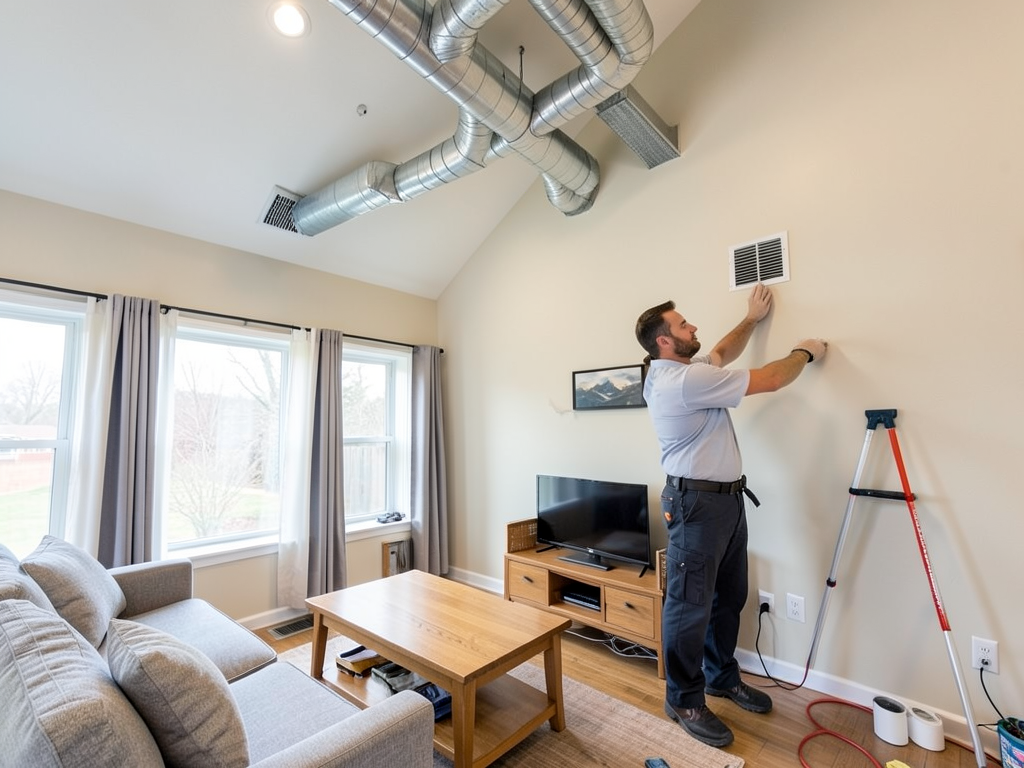
For existing ductwork modifications can help dramatically. Adding high sidewall return vents near the ceiling pulls hot air down where your AC can remove its heat. This breaks up the stratified layers and gives your system better control over room temperature. These returns should be at least twenty-four inches below the ceiling to avoid pulling in too much humid attic air.
High-velocity HVAC systems work well in homes with limited attic space. These use small flexible ducts that fit in tight areas and deliver air at high speeds that mix the room air thoroughly. The outlets are small and can be placed high on walls where they push air across the ceiling and down the walls creating better circulation than standard vents.
Manual J load calculations become critical for vaulted spaces. This industry standard determines the exact cooling capacity your room needs based on volume not just floor area. Many Southchase homes have AC units sized for the slab area but not the cubic feet of air above. This leads to systems that run constantly without ever catching up on hot days.
Table: Cooling Solutions Comparison for High Ceilings
| Solution | Installation Cost | Energy Savings | Best For |
|---|---|---|---|
| High Wall Return Vents | Low | Moderate | Existing systems |
| Zone Control System | Medium | High | Multi-room homes |
| Mini-Split Installation | High | Very High | New construction |
| High-Velocity System | Very High | High | Retrofit challenges |
The Role of Ceiling Fans (Summer vs. Winter Settings)
Ceiling fans provide the simplest and most cost-effective solution for vaulted ceiling comfort. The key is understanding blade direction and pitch. In summer fans should spin counterclockwise when viewed from below. This creates a downward airflow that produces a wind chill effect making you feel up to eight degrees cooler without changing the actual temperature.. Read more about Fixing poor airflow in the back bedrooms of your Bithlo ranch home.
Blade pitch matters more in high-ceiling spaces. Standard fans have three to five degree pitches that work for eight-foot ceilings. For vaulted spaces you need six to fifteen degree pitches to move enough air down to where people sit. The steeper angle moves more cubic feet per minute but needs more powerful motors to avoid burning out.
Fan size must match your room volume. A twelve by fifteen foot room with standard ceilings needs a forty-eight inch fan. The same floor area with sixteen-foot ceilings needs a sixty-inch fan to move enough air. For great rooms over twenty feet wide you might need multiple fans or one oversized industrial model.
Winter operation reverses the fan direction. Clockwise rotation at low speed pulls cool air up from the floor and pushes warm air trapped at the ceiling down the walls. This mixing reduces the temperature difference between floor and ceiling. In Orlando’s mild winters this feature helps balance temperatures without running your heating system as much.
Smart fan controls add convenience for vaulted spaces. Remote controls eliminate the need for pull chains that are hard to reach. Some models include humidity sensors that automatically adjust speed when moisture levels rise. Others integrate with smart home systems letting you control fan speed from your phone or set automatic schedules.
Installation height affects fan performance. For eight-foot ceilings fans hang eight to ten inches below the ceiling. For vaulted spaces with twelve-foot minimums you need downrods of twelve to thirty-six inches. The goal is keeping blades twelve to twenty-four inches below the ceiling for optimal air movement without creating a head bumping hazard.
Energy Efficiency and SEER Ratings for Large Volumes
High-ceiling spaces require careful consideration of SEER2 ratings. These measure cooling efficiency but behave differently in large volume rooms. A standard fifteen SEER unit might struggle in a vaulted space while an eighteen SEER model with variable speed technology handles the same load using less energy.
Variable speed compressors make the biggest difference in high-ceiling cooling. Unlike single stage units that are either on or off these adjust their output from thirty to one hundred percent. This matches the cooling provided to the actual heat load reducing waste. In vaulted spaces this prevents the temperature swings that make comfort impossible.
Two-stage systems offer a middle ground. These run at reduced capacity for mild cooling needs then ramp up for heat waves. The lower speed handles most summer days efficiently while the higher speed provides enough power for extreme Orlando heat. This staged approach extends equipment life since the system runs longer but works less hard.
Proper system sizing prevents energy waste. Oversized units cool the air quickly but do not run long enough to remove humidity. This leaves your vaulted room feeling cool but clammy. Undersized units run constantly trying to catch up. A correctly sized variable speed system runs longer cycles at lower speeds removing both heat and moisture effectively.
Smart thermostats help manage vaulted ceiling challenges. Models with remote sensors let you place the temperature reading where people actually sit rather than at standard five-foot height. Some learn your schedule and adjust cooling based on occupancy. Others use geofencing to start cooling before you arrive home so the space feels comfortable immediately.
Energy audits identify specific losses in high-ceiling homes. These inspections use thermal imaging to find heat gain through ceilings and walls. They measure air leakage that lets conditioned air escape. They calculate the cubic volume your system must cool. This data helps determine if your current equipment is adequate or if upgrades would pay for themselves through energy savings.
When to Call a Professional: Custom HVAC Design in Orlando
Certain signs indicate you need professional help for your vaulted ceiling cooling problems. If your AC runs constantly but temperatures still rise above seventy-eight degrees on mild days your system is undersized for the volume. If you notice condensation on high windows or mold spots in upper corners your humidity control is failing. Professional duct cleaning services for historic homes in Thornton Park.
Professional HVAC design starts with Manual J calculations specific to your room dimensions. This industry standard considers not just floor area but ceiling height wall construction window orientation and local climate data. For Southchase homes this means factoring in our typical summer high of ninety-two degrees and seventy percent relative humidity.
Building code compliance affects your options. Florida Building Code requires minimum SEER2 ratings that increase each year. New installations must meet current standards which might be higher than your existing system. The code also mandates specific duct insulation levels and requires returns to be properly sized for the air volume they handle. Florida Building Code energy requirements.
Professional installation prevents costly mistakes. Improper refrigerant charging cuts efficiency by up to twenty percent. Leaky ducts waste ten to thirty percent of your cooling before it reaches the room. Poor airflow design creates hot and cold spots. Licensed contractors follow manufacturer specifications and local codes ensuring your system works as designed.
Maintenance needs change with vaulted ceiling systems. High wall returns need annual cleaning since they collect more dust from the increased air volume. Fan coil units in mini-splits require regular filter changes to maintain their high efficiency. Smart thermostats need calibration to ensure their sensors read accurately in tall spaces.
Emergency repairs become more critical in high-ceiling homes. When your AC fails the temperature in vaulted spaces can rise ten degrees in an hour. This stresses electronics and makes comfort impossible. Having a reliable contractor who understands your system design means faster diagnosis and repair when problems strike. Fast and affordable AC leak repair in Altamonte Springs.
Pick up the phone and call (321) 463-7979 before the next storm hits.
Frequently Asked Questions
Why does my vaulted ceiling room feel hotter than other rooms?
Hot air rises and collects at the top of tall spaces. Your thermostat reads the cooler air at five feet but the air you breathe near the floor can be several degrees warmer. This thermal stratification is worse in Orlando’s humid climate where moist air holds more heat energy.
Can I just add a bigger AC unit to fix the problem?
Not necessarily. An oversized unit cools air quickly but runs too short to remove humidity. This leaves you with cool but clammy air. The right solution often involves better air circulation zoning or a variable speed system that matches cooling output to the actual heat load.
How much do ceiling fans really help?
Properly sized and positioned ceiling fans create a wind chill effect that makes you feel up to eight degrees cooler. This allows you to set your thermostat higher saving energy. In vaulted spaces you need extended downrods and steeper blade pitches to move enough air down to the living level.
What is the most cost-effective solution for existing homes?
Adding high sidewall return vents near the ceiling often provides the best return on investment. These pull hot air down where your AC can remove its heat breaking up the stratified layers. This modification costs less than a new system but can improve comfort dramatically.
How do I know if my system is properly sized?
A professional Manual J calculation considers your room’s cubic volume not just floor area. Signs of improper sizing include constant running without reaching set temperature short cycling or humidity problems. In Southchase most homes need assessment since many were built with standard sizing that does not account for vaulted spaces.
Should I replace my ducts when upgrading my system?
If your ducts are over fifteen years old leaking or improperly sized replacement is often worth considering. New insulated ducts with proper sealing can improve efficiency by ten to thirty percent. For vaulted ceiling applications the duct layout becomes even more important for delivering air where it is needed. For more information, visit Energy.gov ceiling fan guide.
You may also find this helpful. Why swamp coolers and portable ACs usually fail in the Pine Castle humidity.
{
“@context”: “https://schema.org”,
“@type”: “BlogPosting”,
“headline”: “How to keep your Southchase living room cool when you have high vaulted ceilings”,
“description”: “High ceilings trap heat in Southchase homes. Learn how Orlando’s humidity and vaulted spaces affect cooling. Get expert HVAC tips for comfort and efficiency.”,
“wordCount”: 2293,
“datePublished”: “2026-04-11T10:50:00.000Z”,
“dateModified”: “2026-04-11T10:50:00.000Z”,
“inLanguage”: “en-US”,
“mainEntityOfPage”: {
“@type”: “WebPage”,
“@id”: “https://summithvacorlando.com”
},
“publisher”: {
“@type”: “LocalBusiness”,
“name”: “Summit HVAC Orlando”,
“url”: “https://summithvacorlando.com”
},
“author”: {
“@type”: “Organization”,
“name”: “Summit HVAC Orlando”,
“url”: “https://summithvacorlando.com”
},
“image”: {
“@type”: “ImageObject”,
“url”: “https://summithvacorlando.com/wp-content/uploads/2026/03/how-to-keep-your-southchase-living-room-cool-when-1.png”
}
}
{
“@context”: “https://schema.org”,
“@type”: “HVACBusiness”,
“name”: “Summit HVAC Orlando”,
“url”: “https://summithvacorlando.com”,
“address”: {
“@type”: “PostalAddress”,
“addressLocality”: “Orlando”
},
“areaServed”: {
“@type”: “City”,
“name”: “Orlando”
}
}
{
“@context”: “https://schema.org”,
“@type”: “FAQPage”,
“mainEntity”: [
{
“@type”: “Question”,
“name”: “Why does my vaulted ceiling room feel hotter than other rooms?”,
“acceptedAnswer”: {
“@type”: “Answer”,
“text”: “Hot air rises and collects at the top of tall spaces. Your thermostat reads the cooler air at five feet but the air you breathe near the floor can be several degrees warmer. This thermal stratification is worse in Orlando’s humid climate where moist air holds more heat energy.”
}
},
{
“@type”: “Question”,
“name”: “Can I just add a bigger AC unit to fix the problem?”,
“acceptedAnswer”: {
“@type”: “Answer”,
“text”: “Not necessarily. An oversized unit cools air quickly but runs too short to remove humidity. This leaves you with cool but clammy air. The right solution often involves better air circulation zoning or a variable speed system that matches cooling output to the actual heat load.”
}
},
{
“@type”: “Question”,
“name”: “How much do ceiling fans really help?”,
“acceptedAnswer”: {
“@type”: “Answer”,
“text”: “Properly sized and positioned ceiling fans create a wind chill effect that makes you feel up to eight degrees cooler. This allows you to set your thermostat higher saving energy. In vaulted spaces you need extended downrods and steeper blade pitches to move enough air down to the living level.”
}
},
{
“@type”: “Question”,
“name”: “What is the most cost-effective solution for existing homes?”,
“acceptedAnswer”: {
“@type”: “Answer”,
“text”: “Adding high sidewall return vents near the ceiling often provides the best return on investment. These pull hot air down where your AC can remove its heat breaking up the stratified layers. This modification costs less than a new system but can improve comfort dramatically.”
}
},
{
“@type”: “Question”,
“name”: “How do I know if my system is properly sized?”,
“acceptedAnswer”: {
“@type”: “Answer”,
“text”: “A professional Manual J calculation considers your room’s cubic volume not just floor area. Signs of improper sizing include constant running without reaching set temperature short cycling or humidity problems. In Southchase most homes need assessment since many were built with standard sizing that does not account for vaulted spaces.”
}
},
{
“@type”: “Question”,
“name”: “Should I replace my ducts when upgrading my system?”,
“acceptedAnswer”: {
“@type”: “Answer”,
“text”: “If your ducts are over fifteen years old leaking or improperly sized replacement is often worth considering. New insulated ducts with proper sealing can improve efficiency by ten to thirty percent. For vaulted ceiling applications the duct layout becomes even more important for delivering air where it is needed. For more information, visit Energy.gov ceiling fan guide.”
}
}
]
}
{
“@context”: “https://schema.org”,
“@type”: “BreadcrumbList”,
“itemListElement”: [
{
“@type”: “ListItem”,
“position”: 1,
“name”: “Home”,
“item”: “https://summithvacorlando.com”
},
{
“@type”: “ListItem”,
“position”: 2,
“name”: “Blog”,
“item”: “https://summithvacorlando.com/blog”
},
{
“@type”: “ListItem”,
“position”: 3,
“name”: “How to keep your Southchase living room cool when you have high vaulted ceilings”
}
]
}
{
“@context”: “https://schema.org”,
“@type”: “Service”,
“serviceType”: “HVAC”,
“provider”: {
“@type”: “LocalBusiness”,
“name”: “Summit HVAC Orlando”,
“url”: “https://summithvacorlando.com”
},
“areaServed”: {
“@type”: “City”,
“name”: “Orlando”
},
“description”: “High ceilings trap heat in Southchase homes. Learn how Orlando’s humidity and vaulted spaces affect cooling. Get expert HVAC tips for comfort and efficiency.”
}