
How to safely reset your Eatonville AC unit after a neighborhood power outage
When a storm rolls through Eatonville and the power flickers, your air conditioner might not restart automatically. That’s because modern AC units have built-in safety features designed to protect the compressor from damage during power surges. This guide walks you through the safe reset process specific to Eatonville’s humid subtropical climate and frequent summer thunderstorms.. Read more about Pre-Hurricane HVAC Safety Steps Every Christmas Florida Homeowner Should Follow.
The key is patience and following the right sequence. Rush the process and you risk expensive compressor damage. Take your time and you’ll have cool air flowing again without calling for emergency service. Emergency Furnace Repair.
Why Eatonville AC units need special reset procedures
Eatonville sits in Orange County where afternoon thunderstorms are common from May through October. These storms often cause brief power interruptions that can trip your AC’s internal safety circuits. The humid climate also means your outdoor condenser unit works harder, making it more sensitive to electrical fluctuations.
Local power providers like Duke Energy and OUC have been upgrading infrastructure, but momentary outages still occur. Your AC’s internal delay timer needs time to reset properly after any power disruption to prevent compressor damage from trying to restart under high head pressure.

Diagram showing the 30-minute delay timer circuit inside a typical residential AC contactor
Safety first: What not to do when your AC won’t start
Never attempt to reset your AC while standing in water or with wet hands. Central Florida’s afternoon storms can leave puddles around your outdoor unit. Wait until everything is dry before touching any electrical components. Florida Building Code Section 13 Energy Efficiency.
Don’t repeatedly flip the breaker on and off trying to force the unit to start. This can damage the compressor’s starting capacitor or the contactor. The 30-minute waiting period isn’t arbitrary—it allows the refrigerant pressure to equalize and the internal circuitry to fully reset.
Avoid using tools or metal objects near the disconnect box or circuit breaker panel. If you’re unsure about any step, call a professional rather than risking electrical shock or equipment damage. Everything you need to know about AC tune-ups in College Park.
The 5-step safe reset process for Eatonville residents
- Turn off the thermostat
Set your thermostat to “Off” at the wall unit or main control panel. This prevents the system from trying to start while you’re working on the electrical components. Who to call when your AC stops working at 2 AM in Orlando.
- Locate and turn off the AC circuit breaker
Find your home’s electrical panel, usually in the garage, laundry room, or exterior wall. Look for a double-pole breaker labeled “AC,” “Air Conditioner,” or with a 240V rating. Flip it to the “Off” position completely.
- Wait exactly 30 minutes
This waiting period is crucial. The compressor’s internal overload protector needs time to cool down, and the system’s control board must reset its safety timers. Use this time to check for any storm debris around your outdoor unit.
- Turn the breaker back on
After 30 minutes, return to your electrical panel and flip the AC breaker back to the “On” position. You should feel and hear a solid click when it engages properly.
- Restart the thermostat
Set your thermostat to “Cool” and adjust the temperature below the current room temperature. Your AC should start within 5 minutes. Listen for the outdoor condenser fan and compressor to engage.
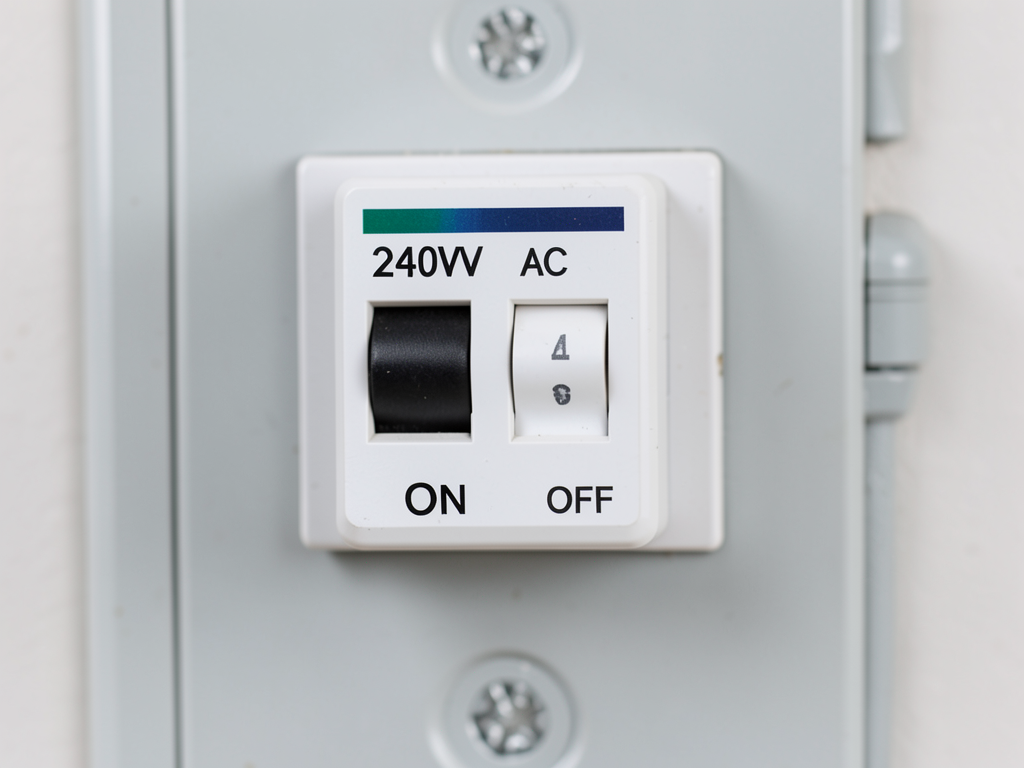
Photo showing a properly labeled 240V AC circuit breaker in a residential electrical panel
What to do if your AC still won’t start
If you’ve followed all five steps and your unit remains silent, several issues could be preventing startup. First, check if the breaker immediately trips again when you turn it on—this indicates a short circuit somewhere in the system.
Listen for any humming sounds from the outdoor unit. A humming noise with no fan movement often means a failed capacitor. No sound at all could indicate a blown control board or failed compressor.
Check the small electrical disconnect box near your outdoor condenser. It has a pull-out block or a toggle switch that might have been tripped during the power surge. Make sure it’s in the correct position.
If your thermostat display is blank, replace the batteries or check if it lost power completely. Some smart thermostats enter a special reboot mode after power outages that requires specific reset procedures.
Understanding Eatonville’s power surge challenges
Eatonville’s location in Central Florida means frequent lightning strikes during summer months. According to the National Weather Service, Orange County experiences an average of 25 thunderstorm days annually, with peak activity in July and August. National Weather Service lightning safety guidelines.
The combination of high humidity and electrical surges creates unique stress on HVAC equipment. Moisture in the air can cause condensation on electrical components, while lightning strikes within miles can send voltage spikes through power lines.
Many Eatonville homes, particularly those built before 2010, lack whole-house surge protection. This leaves HVAC systems vulnerable to the very power fluctuations that trigger the need for manual resets.
Surge protection solutions for Eatonville homes
Installing a whole-house surge protector at your main electrical panel provides the first line of defense. These devices can absorb voltage spikes up to 20,000 amps, protecting not just your AC but all home electronics.
For HVAC-specific protection, consider an AC compressor saver kit. These devices provide a boost of power during startup, reducing the electrical stress that often triggers internal safety shutdowns.
Point-of-use surge protectors with battery backup for your thermostat can prevent control board damage during brief outages. This is especially important for smart thermostats that contain delicate electronics.
Common capacitor failure signs after power outages
The capacitor is often the weakest link in an AC system during power surges. This cylindrical component stores electrical energy to start the compressor and run the fan motors. When it fails, you’ll typically hear a humming noise but see no movement from the outdoor unit.
Visual signs of capacitor failure include bulging, leaking oil, or a split casing. However, many failures show no external signs. A technician uses a multimeter to test capacitance and determine if replacement is needed.
In Eatonville’s climate, capacitors typically last 5-7 years. Power surges can reduce this lifespan significantly. Replacing a capacitor is much less expensive than replacing a compressor damaged by repeated starting attempts on a failing capacitor.
When to call a professional AC technician
Call for professional service if your breaker trips immediately when turned on, if you smell burning from the outdoor unit, or if the unit makes loud clicking or grinding noises during attempted startup. Professional duct cleaning services for historic homes in Thornton Park.
Other signs requiring professional attention include ice formation on refrigerant lines, water leaking from the indoor air handler, or if the system starts but blows warm air. These symptoms indicate problems beyond simple power restoration.
For Eatonville residents, Summit HVAC Orlando offers 24/7 emergency service. Our technicians carry common replacement parts and can diagnose most issues within an hour of arrival. Call (321) 463-7979 for immediate assistance.
Photo of a technician using a multimeter to test AC capacitor capacitance
Preventing future reset needs in Eatonville
Regular maintenance significantly reduces the likelihood of power-related AC failures. Annual tune-ups include checking electrical connections, testing capacitors, and cleaning components that could cause overheating and trigger safety shutdowns.
Consider installing a smart thermostat with power outage detection. These devices can automatically attempt safe restarts after power is restored, eliminating the need for manual intervention.
Keep the area around your outdoor condenser clear of debris, especially after storms. Leaves, branches, and other debris can restrict airflow and cause the system to overheat, potentially triggering safety shutdowns even when power is stable.
Local building codes and surge protection requirements
Under Florida Building Code Section 13 Energy Efficiency, all new HVAC installations must include minimum surge protection. The code requires surge protection devices (SPDs) for equipment with a minimum rating of 20,000 amps per mode.
Article 440 of the National Electrical Code (NEC) specifically addresses air conditioning and refrigeration equipment, requiring proper disconnect means and overcurrent protection for all HVAC installations in Eatonville and throughout Orange County.
Local permitting through Orange County Building Services ensures all new AC installations meet these safety standards. Existing systems should be evaluated for code compliance, especially after major storms or system replacements.
Frequently Asked Questions
How long should I really wait before resetting my AC?
Wait exactly 30 minutes after turning off the breaker. This allows the compressor’s internal overload protector to cool and the refrigerant pressure to equalize. Rushing this process can damage expensive components.
Can a power outage actually damage my AC compressor?
Yes. Power surges can damage capacitors, contactors, and control boards. More seriously, trying to restart a compressor under high head pressure can cause mechanical failure. That’s why the 30-minute delay is built into modern systems.
Should I turn off my AC during a thunderstorm?
Turning your thermostat to “Off” during severe storms provides some protection, but the best safeguard is a whole-house surge protector. If you know a major storm is approaching, turning off the AC at the breaker adds an extra layer of protection.
What’s the difference between a tripped breaker and a blown fuse?
A tripped breaker can be reset by flipping it to “Off” then back to “On.” A blown fuse requires replacement. Many outdoor disconnect boxes contain cartridge fuses that can blow during power surges. If your breaker won’t stay on, check these fuses.
How can I tell if my AC is in “lockout mode”?
Lockout mode typically occurs after repeated failed startup attempts. The system will show no response when you adjust the thermostat. After a 30-minute reset, the system should exit lockout mode. If it doesn’t, professional diagnosis is needed.
Call for professional Eatonville AC service
If you’ve tried the safe reset procedure and your AC still won’t start, don’t risk further damage by continuing to troubleshoot. Summit HVAC Orlando’s certified technicians understand Eatonville’s unique climate challenges and can diagnose problems quickly.
We stock common replacement parts and offer transparent pricing with no hidden fees. Our 24/7 emergency service means you won’t wait hours in the Florida heat. Call (321) 463-7979 today to schedule your inspection or get immediate emergency service.
Don’t let a simple power outage turn into a costly compressor replacement. Professional diagnosis now can save you thousands in repairs later. Pick up the phone and call (321) 463-7979 before the next storm hits. Fast and affordable AC leak repair in Altamonte Springs.
{
“@context”: “https://schema.org”,
“@type”: “BlogPosting”,
“headline”: “How to safely reset your Eatonville AC unit after a neighborhood power outage”,
“description”: “Learn the safe 5-step process to reset your Eatonville AC after a power outage. Includes Orlando-specific tips for surge protection and compressor safety.”,
“wordCount”: 1755,
“datePublished”: “2026-04-25T07:26:00.000Z”,
“dateModified”: “2026-04-25T07:26:00.000Z”,
“inLanguage”: “en-US”,
“mainEntityOfPage”: {
“@type”: “WebPage”,
“@id”: “https://summithvacorlando.com”
},
“publisher”: {
“@type”: “LocalBusiness”,
“name”: “Summit HVAC Orlando”,
“url”: “https://summithvacorlando.com”
},
“author”: {
“@type”: “Organization”,
“name”: “Summit HVAC Orlando”,
“url”: “https://summithvacorlando.com”
},
“image”: {
“@type”: “ImageObject”,
“url”: “https://summithvacorlando.com/wp-content/uploads/2026/03/how-to-safely-reset-your-eatonville-ac-unit-after-1.png”
}
}
{
“@context”: “https://schema.org”,
“@type”: “HVACBusiness”,
“name”: “Summit HVAC Orlando”,
“url”: “https://summithvacorlando.com”,
“address”: {
“@type”: “PostalAddress”,
“addressLocality”: “Orlando”
},
“areaServed”: {
“@type”: “City”,
“name”: “Orlando”
}
}
{
“@context”: “https://schema.org”,
“@type”: “FAQPage”,
“mainEntity”: [
{
“@type”: “Question”,
“name”: “How long should I really wait before resetting my AC?”,
“acceptedAnswer”: {
“@type”: “Answer”,
“text”: “Wait exactly 30 minutes after turning off the breaker. This allows the compressor’s internal overload protector to cool and the refrigerant pressure to equalize. Rushing this process can damage expensive components.”
}
},
{
“@type”: “Question”,
“name”: “Can a power outage actually damage my AC compressor?”,
“acceptedAnswer”: {
“@type”: “Answer”,
“text”: “Yes. Power surges can damage capacitors, contactors, and control boards. More seriously, trying to restart a compressor under high head pressure can cause mechanical failure. That’s why the 30-minute delay is built into modern systems.”
}
},
{
“@type”: “Question”,
“name”: “Should I turn off my AC during a thunderstorm?”,
“acceptedAnswer”: {
“@type”: “Answer”,
“text”: “Turning your thermostat to \”Off\” during severe storms provides some protection, but the best safeguard is a whole-house surge protector. If you know a major storm is approaching, turning off the AC at the breaker adds an extra layer of protection.”
}
},
{
“@type”: “Question”,
“name”: “What’s the difference between a tripped breaker and a blown fuse?”,
“acceptedAnswer”: {
“@type”: “Answer”,
“text”: “A tripped breaker can be reset by flipping it to \”Off\” then back to \”On.\” A blown fuse requires replacement. Many outdoor disconnect boxes contain cartridge fuses that can blow during power surges. If your breaker won’t stay on, check these fuses.”
}
},
{
“@type”: “Question”,
“name”: “How can I tell if my AC is in \”lockout mode\”?”,
“acceptedAnswer”: {
“@type”: “Answer”,
“text”: “Lockout mode typically occurs after repeated failed startup attempts. The system will show no response when you adjust the thermostat. After a 30-minute reset, the system should exit lockout mode. If it doesn’t, professional diagnosis is needed.”
}
}
]
}
{
“@context”: “https://schema.org”,
“@type”: “HowTo”,
“name”: “How to reset Eatonville AC after power outage”,
“step”: [
{
“@type”: “HowToStep”,
“position”: 1,
“name”: “Turn off the thermostat”,
“text”: “Set your thermostat to \”Off\” at the wall unit or main control panel. This prevents the system from trying to start while you’re working on the electrical components. Who to call when your AC stops working at 2 AM in Orlando.”
},
{
“@type”: “HowToStep”,
“position”: 2,
“name”: “Locate and turn off the AC circuit breaker”,
“text”: “Find your home’s electrical panel, usually in the garage, laundry room, or exterior wall. Look for a double-pole breaker labeled \”AC,\” \”Air Conditioner,\” or with a 240V rating. Flip it to the \”Off\” position completely.”
},
{
“@type”: “HowToStep”,
“position”: 3,
“name”: “Wait exactly 30 minutes”,
“text”: “This waiting period is crucial. The compressor’s internal overload protector needs time to cool down, and the system’s control board must reset its safety timers. Use this time to check for any storm debris around your outdoor unit.”
},
{
“@type”: “HowToStep”,
“position”: 4,
“name”: “Turn the breaker back on”,
“text”: “After 30 minutes, return to your electrical panel and flip the AC breaker back to the \”On\” position. You should feel and hear a solid click when it engages properly.”
},
{
“@type”: “HowToStep”,
“position”: 5,
“name”: “Restart the thermostat”,
“text”: “Set your thermostat to \”Cool\” and adjust the temperature below the current room temperature. Your AC should start within 5 minutes. Listen for the outdoor condenser fan and compressor to engage.”
}
],
“image”: “https://summithvacorlando.com/wp-content/uploads/2026/03/how-to-safely-reset-your-eatonville-ac-unit-after-1.png”
}
{
“@context”: “https://schema.org”,
“@type”: “BreadcrumbList”,
“itemListElement”: [
{
“@type”: “ListItem”,
“position”: 1,
“name”: “Home”,
“item”: “https://summithvacorlando.com”
},
{
“@type”: “ListItem”,
“position”: 2,
“name”: “Blog”,
“item”: “https://summithvacorlando.com/blog”
},
{
“@type”: “ListItem”,
“position”: 3,
“name”: “How to safely reset your Eatonville AC unit after a neighborhood power outage”
}
]
}
{
“@context”: “https://schema.org”,
“@type”: “Service”,
“serviceType”: “HVAC”,
“provider”: {
“@type”: “LocalBusiness”,
“name”: “Summit HVAC Orlando”,
“url”: “https://summithvacorlando.com”
},
“areaServed”: {
“@type”: “City”,
“name”: “Orlando”
},
“description”: “Learn the safe 5-step process to reset your Eatonville AC after a power outage. Includes Orlando-specific tips for surge protection and compressor safety.”
}